
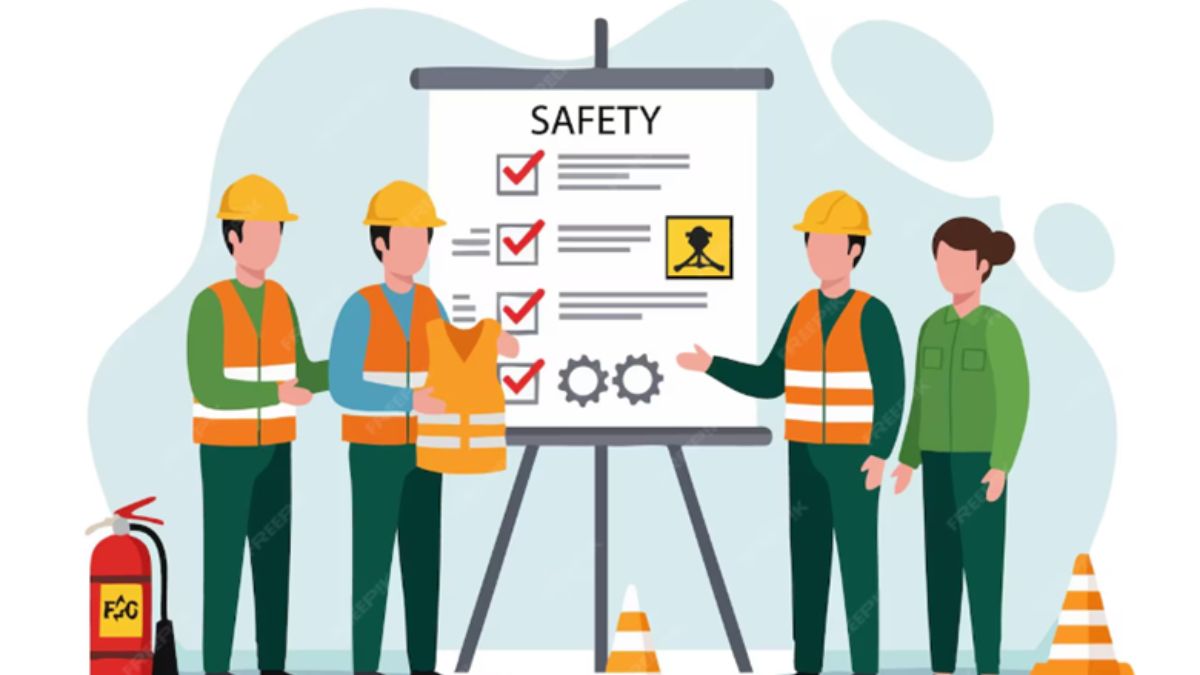
The existing situation where thousands of incidents yearly in the workplace could have been avoided through proper hazard assessments persists. But the question of who actually has the responsibility keeps haunting many organizations, which is the main issue contributing to their weak safety programs.
The confusion that arises is quite normal. Safety is often seen as a responsibility of all parties, which sometimes is interpreted that no one is responsible. Employees take for granted that the management is taking care of it. The managers assume that the safety officers have it under control. The safety officers are thinking that they cannot be present everywhere at the same time. In the meantime, risks are present and ready to damage when the right factors come together.
The resolution of the question of ownership is not a matter of compliance or formality but rather the establishment of a system where hazards are captured before people are harmed, where risks are systematically assessed instead of reactively and where accountability is clearly passed through every tier of your organization.
Decoding HIRA: More Than Just an Acronym
Before we can assign responsibility effectively, we need to understand what we’re actually asking people to do. This is where understanding the hira full form in safety becomes essential.
HIRA is an acronym for Hazard Identification and Risk Assessment. However, that sterile definition does not reflect what it truly is in practice. Imagine HIRA as the early warning system of your organization, a systematic way of identifying potential issues before they turn into actual injuries, illnesses or incidents.
Why the Framework Matters
Hazard assessments without a systematic method like HIRA turn into subjective practices that depend on the person noticing something alarming first. One supervisor could be over-cautious with machinery risks but fail to notice ergonomic issues. Another could concentrate on chemical hazards while being oblivious to slip and fall risks.
HIRA gives the structure that guarantees nothing is overlooked. It changes the approach to safety from being reactive firefighting to being proactive risk management. Rather than exploring the reasons for an accident, you are preventing it from happening in the first place.
The Core Components of HIRA
Understanding the methodology helps clarify why different people need to be involved at different stages.
Hazard Identification: The Foundation
The initial stage of the process is to search for possible sources of harm in a structured way. Among these sources are evident and clearly identifiable ones such as unguarded machines or toxic chemicals, as well as Factors such as repetitive working, poor lighting or stress at the workplace which are not so apparent and hence, are less regarded as risks.
It is essential to have different perspectives in order to identify hazards more effectively. For instance, the operator of the machine that is used daily has knowledge of the machine’s quirks while the engineer who designed it may never think about that aspect. Also, the maintenance technician is likely to view things like potential points of failure that production supervisors may not.
Risk Evaluation: Determining Priority
After hazards have been recognized, they must be assessed. The criteria for evaluation will include their probability and impact. An accident that may cause a little injury but occurs very often may be of more concern than an incident involving a big explosion that has a very low chance of happening. The risk matrix is a result of this evaluation, which indicates the order of safety resource allocation.
Control Implementation: Taking Action
To be of any use, assessments must lead to actions taken. The next step is to select and apply the right controls, following the hierarchy from elimination and not through engineering controls, administrative measures and PPE.
Monitoring and Review: Staying Current
The work environment is in a constant state of change. New machines come in, new methods are used and new materials are introduced. Labor Intensity Risk Assessment (HIRA) is not a one-time project but ongoing exercise that evolves with the changes.
Mapping Responsibility Across Your Organization
Now we get to the heart of the matter: who is responsible for conducting a hazard assessment? The answer involves multiple layers of accountability.
Executive Leadership: Setting the Tone
The ultimate responsibility rests with the highest management and executives. They do not perform separate assessments, but rather establish environments where effective assessments are possible. This includes provision of budget support for safety programs, development of policies that stress hazard identification and, through decisions, showing that safety is indeed a priority.
Safety Professionals: Providing Expertise
Organizations that employ safety officers, EHS managers or industrial hygienists are able to leverage the unique expertise of such professionals. These experts generally are responsible for the official HIRA procedure, the follow-up of the standards, the upkeep of the records and they also give technical advice on the control measures used.
Nevertheless, their presence is not universal all the time. Their main job is to empower and to manage the process rather than to find every hazard in every place.
Building a Functional HIRA System
Understanding who should be involved is one thing. Making it work practically is another. Here’s how to translate theory into action.
Form Cross-Functional Assessment Teams
Instead of relying on one person to do the assessments in isolation, establish teams that will share different viewpoints. For instance, a team responsible for the manufacturing assessment may consist of the production supervisor, operators, maintenance staff, a safety rep and a quality control person.
This diversity prevents blind spots and builds broader ownership of the resulting action plans.
Establish Clear Triggers for Assessment
Specifically identify situations that will need to be assessed for hazards: Installation of new machines or methods, accidents (or near misses) happening, changes in the law affecting your business, periodic assessments depending on the risk level set and employees pointing out certain dangers.
Having specified triggers avoids the mentality of “we will reach it eventually”, which allows hazards to last forever.
Create Accessible Documentation
Even the best assessment does not count if nobody can find or comprehend the result. Documentation needs to be so simple that a person with no background in the area could tell what the existing hazards are, what the safeguards are and what the changes that he/she/they has to make as a result are.
Digital solutions can be of assistance, however, a simple spreadsheet or a binder can also serve the purpose if the proper organization is being done on a consistent basis and the reference is actually being made during the decision-making process.
Train Everyone in Their Role
You can’t ask people to carry out hazard assessments and then not give them the necessary training to do so. The training needs to be specific to each role: executives must know their governance responsibilities, supervisors must master practical assessment methods and workers must learn how to perceive and inform about hazards.
This kind of training should not merely be a single-time event for new hires to go through. It should be done repeatedly as the working environment changes and people change positions.
Overcoming Implementation Obstacles
Even with clear ownership and good processes organizations face predictable challenges in making HIRA work effectively.
The “Too Busy” Trap
Production pressures create constant tension with safety activities. When deadlines loom or staffing is tight, hazard assessments feel like luxuries rather than necessities. The solution isn’t just telling people safety comes first – it’s building assessment activities into normal work processes rather than treating them as separate tasks.
Assessment Without Action
Some organizations conduct impressive assessments that identify numerous hazards, then fail to implement controls. This destroys credibility and creates cynicism. If you’re going to ask people to identify hazards, you must be prepared to act on what they find.
Conclusion
From grasping what HIRA stands for to its successful implementation, the power of workplace hazard assessment rests on the sharing of ownership together with the clearness of accountability. The acronym might indicate Hazard Identification and Risk Assessment, but the core idea is to establish systematic protection of those who are the driving force behind your organization.