
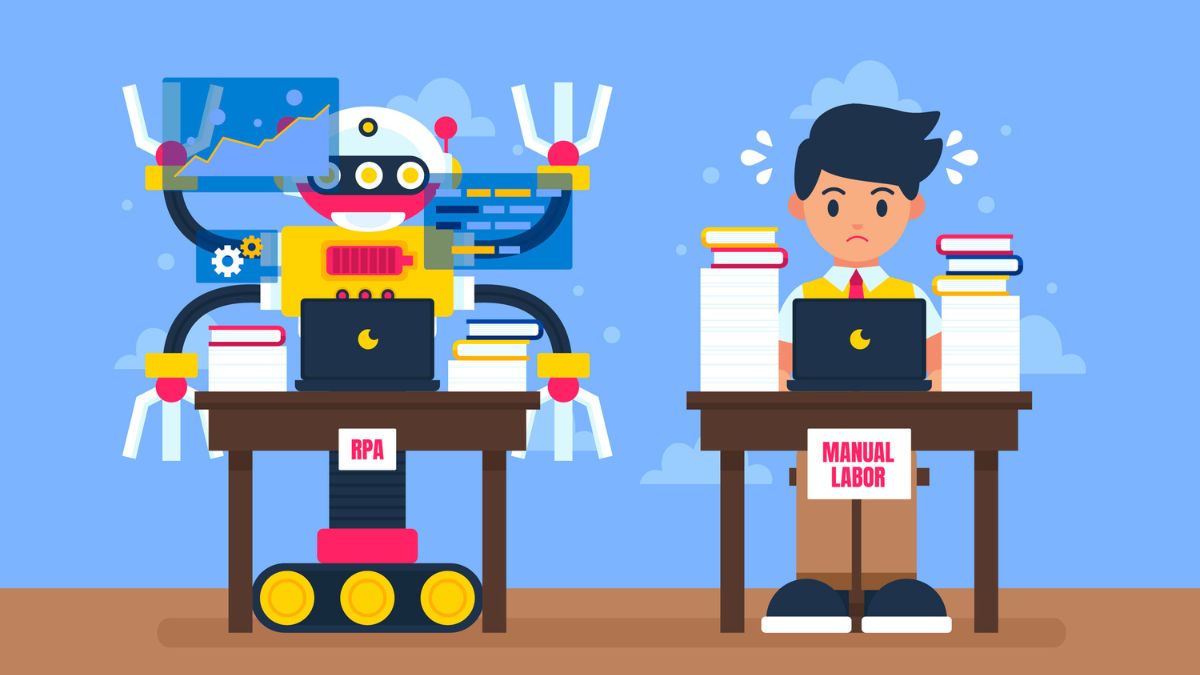
For decades, robotics software followed a rigid, layered structure. Perception fed planning. Planning fed control. Each layer was hand-engineered, tuned for a specific robot, environment, and task. Progress was slow, expensive, and fragile—much like systems that rely on memorized heuristics or narrow optimizations rather than true adaptability, similar in concept to relying on jetx game tricks instead of understanding the underlying mechanics.
Foundation models are breaking that structure apart. Instead of carefully stitched pipelines, robots are increasingly driven by large, general models that absorb perception, reasoning, and action into a single learning system. This shift is not incremental. It is structural. The traditional robotics software stack is collapsing because its assumptions no longer hold.
What the Traditional Robotics Stack Was Built For
Modular Systems and Predictable Worlds
Classic robotics assumed the world could be modeled cleanly. Sensors detected objects. Algorithms classified them. Planners generated trajectories. Controllers executed motions. Each step had clear inputs and outputs.
This worked in constrained environments like factories or warehouses. The rules were stable. Objects were standardized. Edge cases were limited.
But this approach depended on human engineers anticipating nearly everything the robot might encounter. When the real world broke those assumptions, the system failed.
Engineering Time Over Data Scale
Traditional stacks favored code over data. Teams spent years writing perception heuristics, tuning planners, and handcrafting behaviors.
Generalization was limited. A system that worked in one environment often broke in another. Adding new tasks meant adding new modules or rewriting old ones.
The stack grew brittle as complexity increased.
What Foundation Models Change
Learning Replaces Hand-Engineering
Foundation models shift the burden from code to data. Instead of writing rules for every scenario, engineers train models on massive, diverse datasets.
These models learn representations of the world that are not task-specific. Vision, language, spatial reasoning, and action are embedded in shared latent spaces.
This makes many traditional layers redundant. The model does not need a separate perception module if perception is implicit in its internal representation.
Generalization Becomes the Default
Because foundation models are trained across tasks, environments, and modalities, they generalize far better than hand-built pipelines.
A single model can recognize objects it has never seen exactly before, interpret ambiguous instructions, and adapt behavior based on context. Traditional stacks struggle with this because each module is narrowly defined.
Generalization collapses the need for rigid interfaces between components.
The End of Strict Layer Separation
Perception, Planning, and Control Are Blurring
In the old stack, perception outputs a world model. Planning consumed that model. Control executed a plan.
Foundation models do not respect these boundaries. A model might take raw sensor input and output motor commands directly. Or it may reason in language space while implicitly planning actions.
The clean separation that once made systems understandable now becomes a limitation. Each boundary adds latency, error, and loss of information.
Latent Representations Replace Explicit Models
Traditional robotics relied on explicit representations like maps, object lists, and state machines.
Foundation models operate on latent representations that encode far more information than explicit structures ever could. These representations are difficult to interpret but extremely powerful.
As a result, explicit world models are no longer always necessary. The robot does not need to name every object to act intelligently around it.
Software Complexity Is Being Absorbed by the Model
Fewer Handwritten Rules
Every rule in a traditional stack exists to handle a specific failure mode. As systems grow, rules multiply and interact in unpredictable ways.
Foundation models absorb much of this complexity internally. The behavior emerges from training rather than from layered logic.
This reduces surface area for bugs and makes systems easier to extend. Instead of rewriting code, teams retrain or fine-tune models.
Behavior Is Learned, Not Scripted
Old systems required engineers to define how a robot should behave in detail. Foundation model-driven systems learn behavior from demonstrations, simulations, and real world data.
This enables robots to perform tasks that were previously too complex to script, such as manipulating unfamiliar objects or operating in messy environments.
The stack collapses because the behavior no longer lives in separate software layers.
Conclusion
Foundation models are collapsing the traditional robotics software stack because they solve the wrong problem that the stack was designed for. The old architecture assumed the world could be decomposed, modeled, and controlled through explicit rules. The real world does not cooperate.
By learning directly from large-scale data, foundation models absorb perception, planning, and behavior into unified systems that generalize far better than modular pipelines ever could.
The result is simpler software, more capable robots, and a fundamental shift in how robotics is built. The stack is not being optimized. It is being replaced.